
For decades, correcting a nasal hump meant resecting it — removing the bony and cartilaginous ridge, then rebuilding the nasal "roof." Preservation rhinoplasty reverses this logic: rather than cutting the hump away, we lower and preserve the patient's natural dorsum. It is the approach I favour whenever the anatomy allows — which is not always the case, as I explain below.
Preserving rather than rebuilding
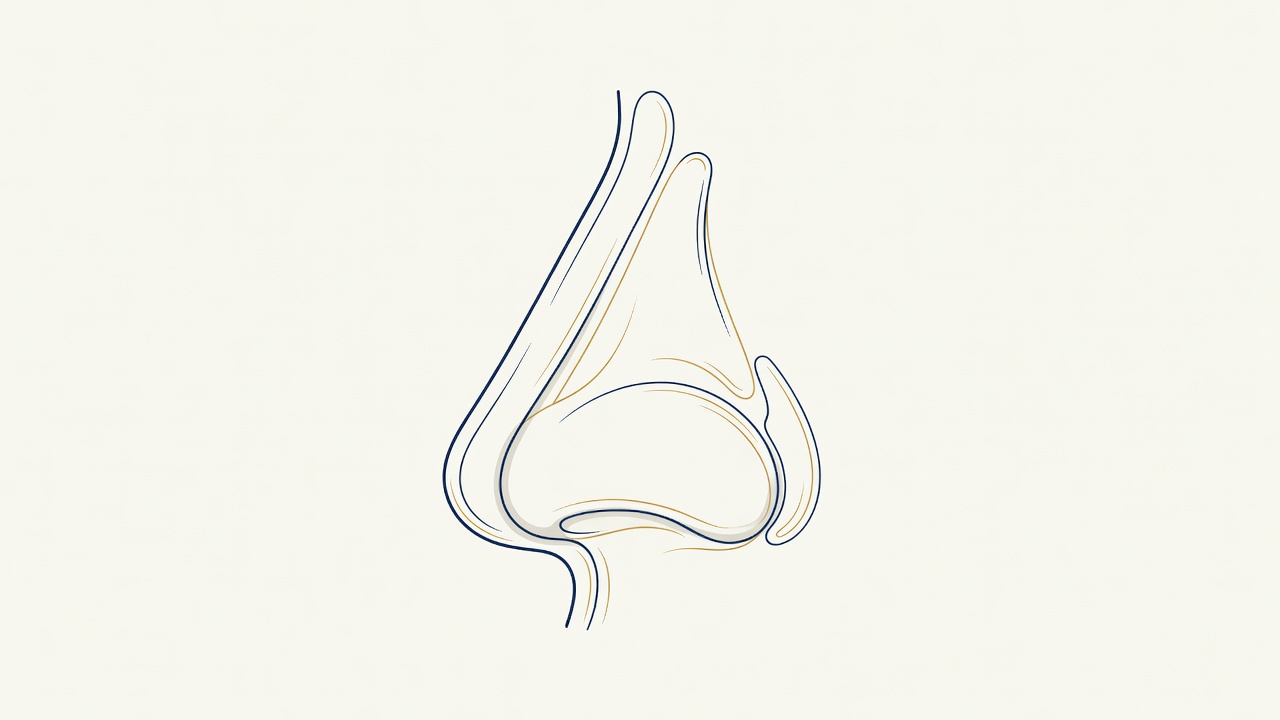
The so-called push-down and let-down techniques remove a small strip of bone at the base of the nose, allowing the dorsum to be lowered as a single block while its surface stays intact. The benefit is twofold: the natural harmony of the nasal lines is preserved, and we avoid the irregularities or "operated" look that can follow a classic resection.
What the 2026 evidence shows
Two major publications released in 2026 reinforce the value of these techniques:
- A systematic review by Gucuk et al. (Aesthetic Plastic Surgery, 2026), covering 13 studies and 855 patients, reports ROE satisfaction scores above 85 (up to 90% of patients satisfied) and very low revision rates of 0 to 7.9%.
- A meta-analysis published in Plastic and Reconstructive Surgery – Global Open (Alharthi et al., 2026) further demonstrates an improvement in the internal nasal valve angle — and therefore breathing — with the spare roof and let-down techniques.
In other words, the literature is now robust enough to consider preservation a validated alternative, both aesthetic and functional, to the classic hump resection.
Why I favour it — when it is possible
Keeping the natural dorsum means respecting the architecture unique to each face. The result tends to be more natural and more stable over time, and recovery is often gentler. Preservation also protects breathing function, a point I value as highly as the aesthetic result.
But let us be clear: pure preservation does not suit every nose. Some large humps, deviations or dorsal irregularities still require structural manoeuvres. In practice, I very often use hybrid approaches — combining dorsal preservation over part of the nose with reconstruction or reshaping techniques where they are needed. It is this case-by-case adaptation that delivers the most reliable results.
Who is it for?
Preservation rhinoplasty is particularly suited to moderate humps and regular dorsums. It is not suitable for every anatomy. Only an in-person examination can determine the strategy best suited to your nose and your expectations — preservation, a hybrid technique or a structural approach. You can learn more on my dedicated rhinoplasty page.
Every nose is unique. The goal is never to give you "a" nose, but to refine your own while preserving what makes it naturally balanced.
Sources: Gucuk et al., Aesthetic Plastic Surgery 2026 — doi.org/10.1007/s00266-026-05853-9; Alharthi et al., PRS Global Open 2026 — PubMed PMID 41907079.