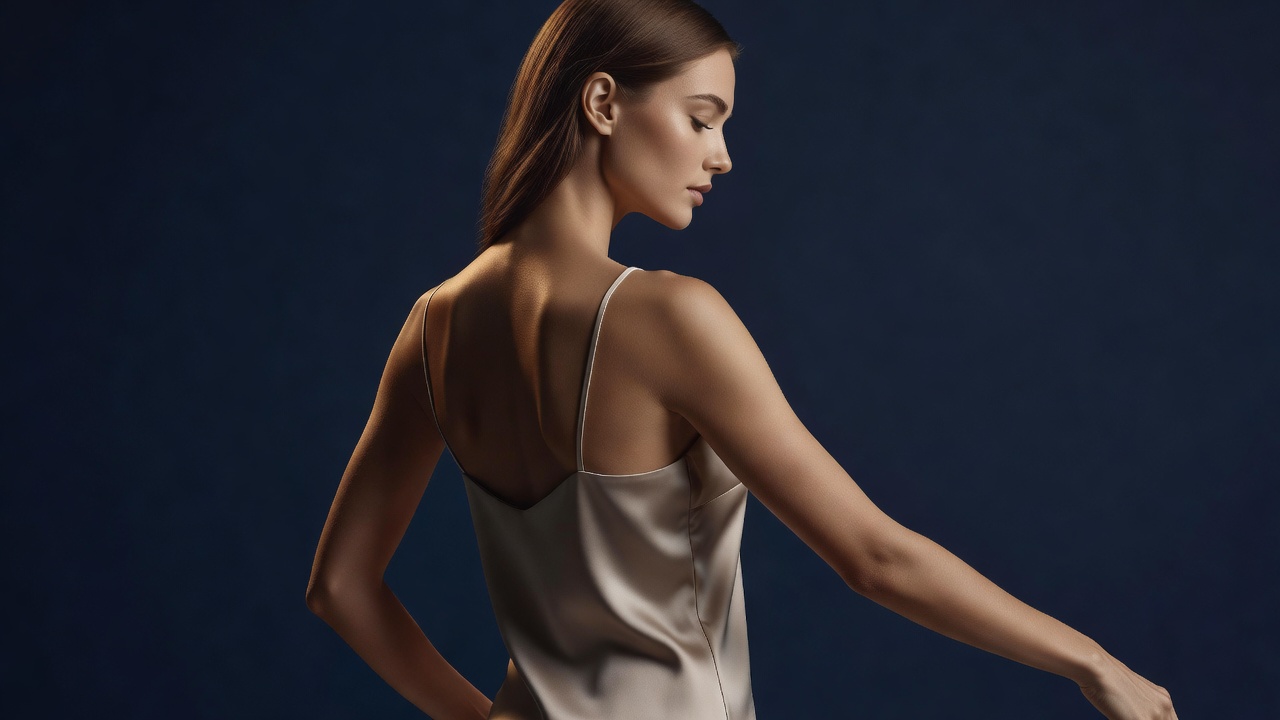
One request comes up more and more often in consultation: "I want it to stay natural, I don't want anyone to be able to tell." This wish reflects a real change of mindset. The era of maximum volume is giving way to the pursuit of harmony: a breast that fits the figure rather than dominating it.
The end of 'bigger is better'
The current trend, sometimes called the "ballerina breast", favours smaller implants (often 150 to 275 cc), with a low or moderate profile, for a light, proportionate and athletic look — inspired by a dancer's silhouette. The idea is not to add volume for its own sake, but to restore a natural shape that suits an active life and ages gracefully.
A French specificity
This preference for natural results is particularly marked in France. A survey of 411 French plastic surgeons (Vanaret et al., 2022) reports average volumes of around 250 to 300 cc — clearly lower than the 400 to 500 cc frequently placed in the United States. European market data confirms this: France and its neighbours use a much higher share of small-volume implants. My patients almost always share this measured approach.
The hybrid technique: an option, not a rule
The hybrid technique combines an implant with fat grafting (injecting your own fat). In selected cases it can better cover the implant in a slim patient, soften the cleavage transition and reduce edge visibility or rippling. An Italian series (Trignano et al., Gland Surgery, 2022) and a large Asian comparative study (Li et al., Plast Reconstr Surg, 2024, 932 cases) report good aesthetic outcomes with this approach.
But let me be clear: the hybrid technique is far from systematic. It is a targeted option for specific indications. It adds a surgical step (harvesting and reinjecting fat), lengthens the procedure, requires sufficient fat reserves, and represents an additional cost. For most patients, a well-chosen, well-positioned implant is more than enough to achieve a natural result. I only suggest added fat grafting when it brings a real benefit.
A move towards authenticity
This shift towards natural results is also seen in the rising demand for downsizing and implant removal (explantation). A large 28-year multicentre study (Zhang et al., Aesthetic Plastic Surgery, 2023, 1004 explantations) shows that the leading reason for removal is not a complication, but aesthetic dissatisfaction — the desire to return to something simpler and more personal.
My approach: bespoke
I never start from a 'fashionable' volume, but from your anatomy, your lifestyle and your expectations. The width of your chest, the quality of your tissues, your physical activity — all of this guides the choice of implant, or sometimes the decision not to use one. The goal is a result that looks like you and lasts over time. You can learn more on my pages dedicated to breast augmentation.
The most beautiful result is not the most visible one: it is the one that looks as if it had never been operated on.
Sources: Vanaret J. et al., Annales de Chirurgie Plastique Esthétique 2022;67(4):183-188 — PubMed PMID 35764445; Trignano E. et al., Gland Surgery 2022 — PubMed PMID 36353588; Li Z. et al., Plastic and Reconstructive Surgery 2024;153(2):325-335 — PubMed PMID 37010471; Zhang Z. et al., Aesthetic Plastic Surgery 2023;47:1743-1750 — doi.org/10.1007/s00266-023-03365-4.