After Instagram and Snapchat filters, here comes the 'AI face'. More and more people use artificial intelligence tools to generate an idealised version of their own face — perfectly smooth skin, absolute symmetry, high cheekbones, the 'perfect' nose — then arrive in consultation with that image as their goal.
A now-documented phenomenon
It is not just an impression: the BMJ (8 September 2026) devoted an article to this trend. A survey by BAAPS (the British Association of Aesthetic Plastic Surgeons) found that 15% of surveyed members have already seen patients present an AI-generated or AI-retouched image of themselves, creating unrealistic expectations. Its president warns that these images 'often bear little relation to an anatomically possible result'.
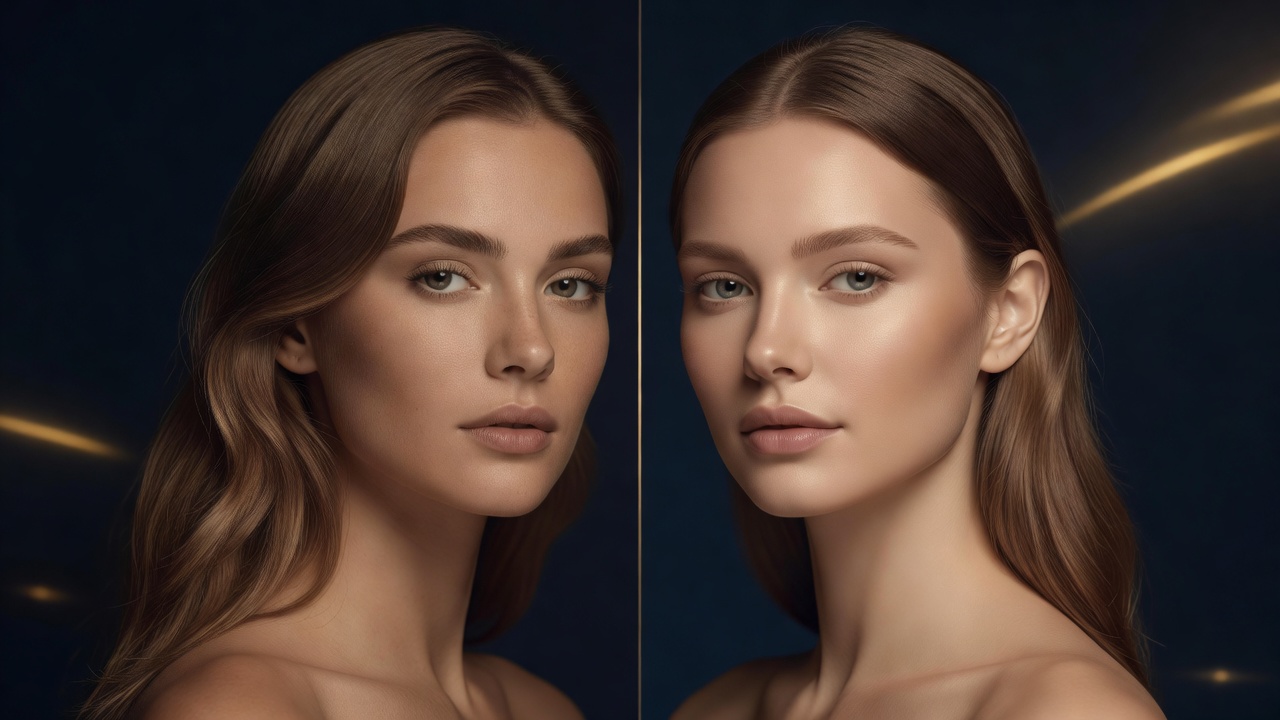
The problem: an avatar is not an anatomy
A generative AI knows nothing of your bones, your cartilage or your skin. It produces an image that is appealing but disconnected from surgical reality: perfect symmetry exists on no human face, poreless skin is not a medical goal, and a 'perfect nose' pasted onto your morphology may simply be unachievable — or unflattering once placed back within the whole of your features.
Wanting to become your own avatar means chasing an image that does not exist. And this gap between the real self and the digital self is precisely the ground of body dysmorphia, which I discussed in a previous article.
What we can correct — and what we must not promise
My work in consultation is to make this distinction, honestly:
- What we can correct: a bump on the nose, a breathing difficulty, drooping eyelids, loss of volume, laxity — real indications, with realistic and lasting results.
- What we must not promise: absolute symmetry, a total transformation, the reproduction of a face that is not anatomically yours. Promising the impossible betrays the patient's trust.
The right tool: 3D simulation, not the AI avatar
To project a result, there is a serious, honest tool: medical 3D simulation. Unlike a filter or a consumer AI, it starts from your real anatomy and offers a reasonable, achievable projection — not a fantasy. It is a valuable basis for dialogue: it helps us understand each other, adjust expectations and agree together on a credible goal. You can discover this tool on my 3D simulation page.
My ethics: honesty above all
A good surgeon is not one who says yes to everything. It is one who knows how to reframe a request, explain what is possible, refuse what is not, and — when necessary — detect psychological distress and refer to appropriate care. AI can be a wonderful tool; it must never become the specification sheet for an operation.
My role is not to turn you into an image generated by a machine, but to enhance, with precision, the very real face that is yours.
Sources: 'AI face drives patients to plastic surgery', The BMJ, 2026;394:e100775 — bmj.com; British Association of Aesthetic Plastic Surgeons (BAAPS) — 'AI-generated faces' press release, 2026.